Every home, addition, and ADU in the San Francisco Bay Area starts the same way: a precisely framed structure that carries every load above it and resists the lateral forces that California’s seismic activity demands. Get that framing right and your building stands solid for generations. Cut corners on it and you’re looking at structural problems no amount of drywall and paint can hide.
SDW Construction has been delivering structural wood framing across the Bay Area since 2001. We work on residential new builds, room additions, ADU framing, multi-unit projects, and complex roof systems across San Francisco, Oakland, San Jose, Berkeley, Marin County, the Peninsula, and East Bay communities. Whether you’re a homeowner managing your first build or a general contractor who needs a reliable framing subcontractor, we work to your plans, on your schedule, with our own trained crew on site every day.
Need a wood framing contractor in the Bay Area? Request a free estimate → or call us directly at (510) 426-1854. Ask about our license, insurance, and framing portfolio.
We manage the full scope of structural wood framing for residential and light commercial projects throughout the Bay Area.
Complete structural framing for new single-family homes — from the first floor deck to the ridge board. We work from your structural drawings, frame to layout, install all headers and beams, and coordinate shear wall locations before any sheathing goes on.
Most Common Scope
ADU framing in California follows the same Residential Code requirements as full homes, including shear wall provisions for Seismic Design Category D. We've framed detached ADUs, garage conversions, and junior ADU build-outs across San Francisco, Oakland, San Jose, and the Peninsula.
High Demand — Bay Area
Hip roofs, valley intersections, dormers, and varying slope transitions require an experienced crew, not just someone who can cut a common rafter. We frame stick-built roofs and install pre-engineered trusses for production and semi-custom builds.
Complex Scope
In the Bay Area's Seismic Design Category D environment, shear walls are a critical part of the lateral force-resisting system. We place structural sheathing panels and all hold-down hardware exactly per the structural engineer's shear wall schedule — no shortcuts.
Seismic Critical
Sill plates, floor joists, rim joists, blocking, and subfloor sheathing — framed from engineered drawings using both dimensional lumber and engineered I-joist systems as specified. We glue and screw subfloor panels to eliminate squeaking and check deck flatness before wall framing begins.
Two-Story Specialist
Adding a room, second story, or building a duplex requires framing that integrates cleanly with the existing structure. We handle room additions, second-story additions, garage-to-living conversions, and light multi-unit residential framing across the Bay Area.
Additions & Remodels
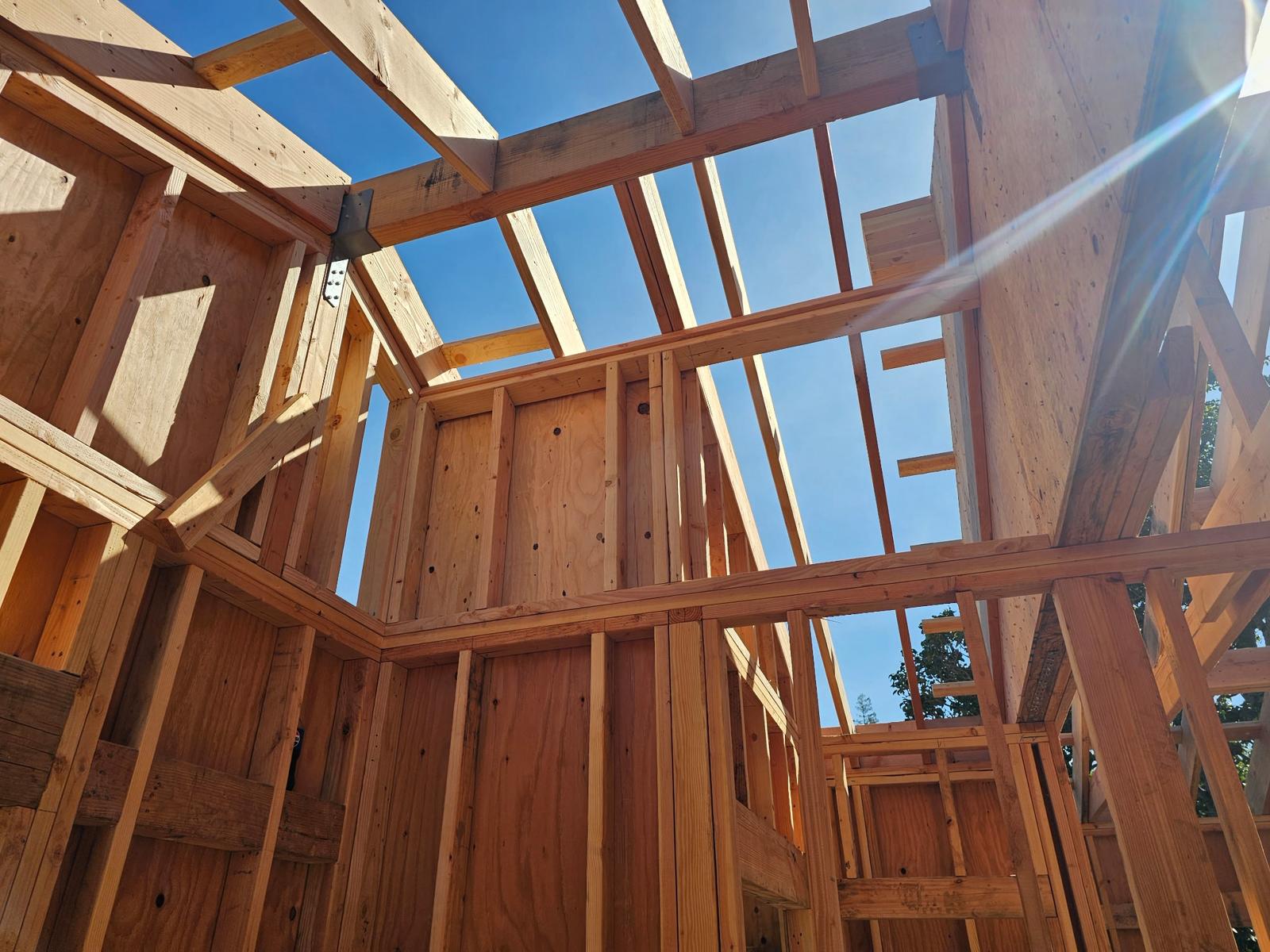
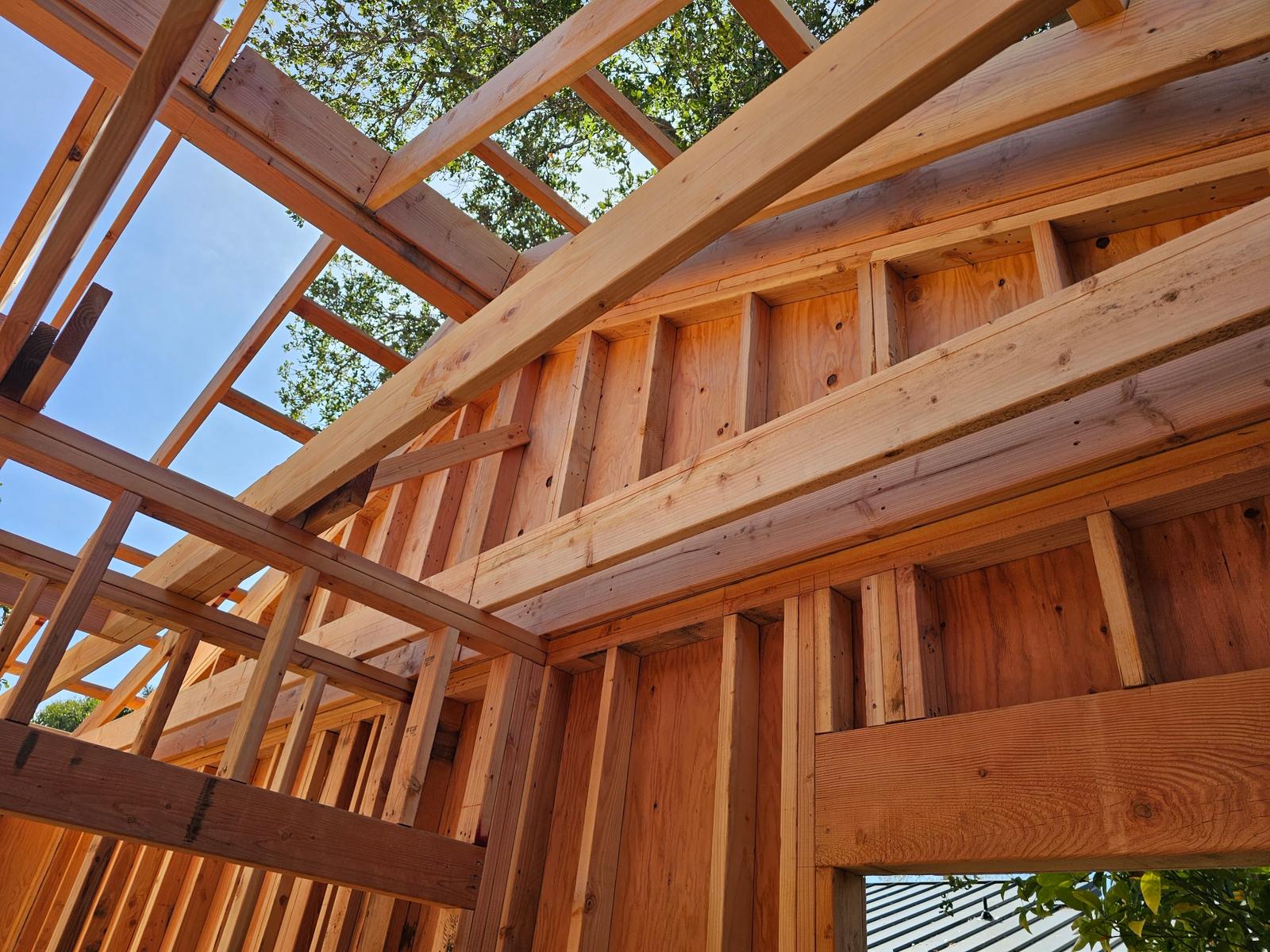
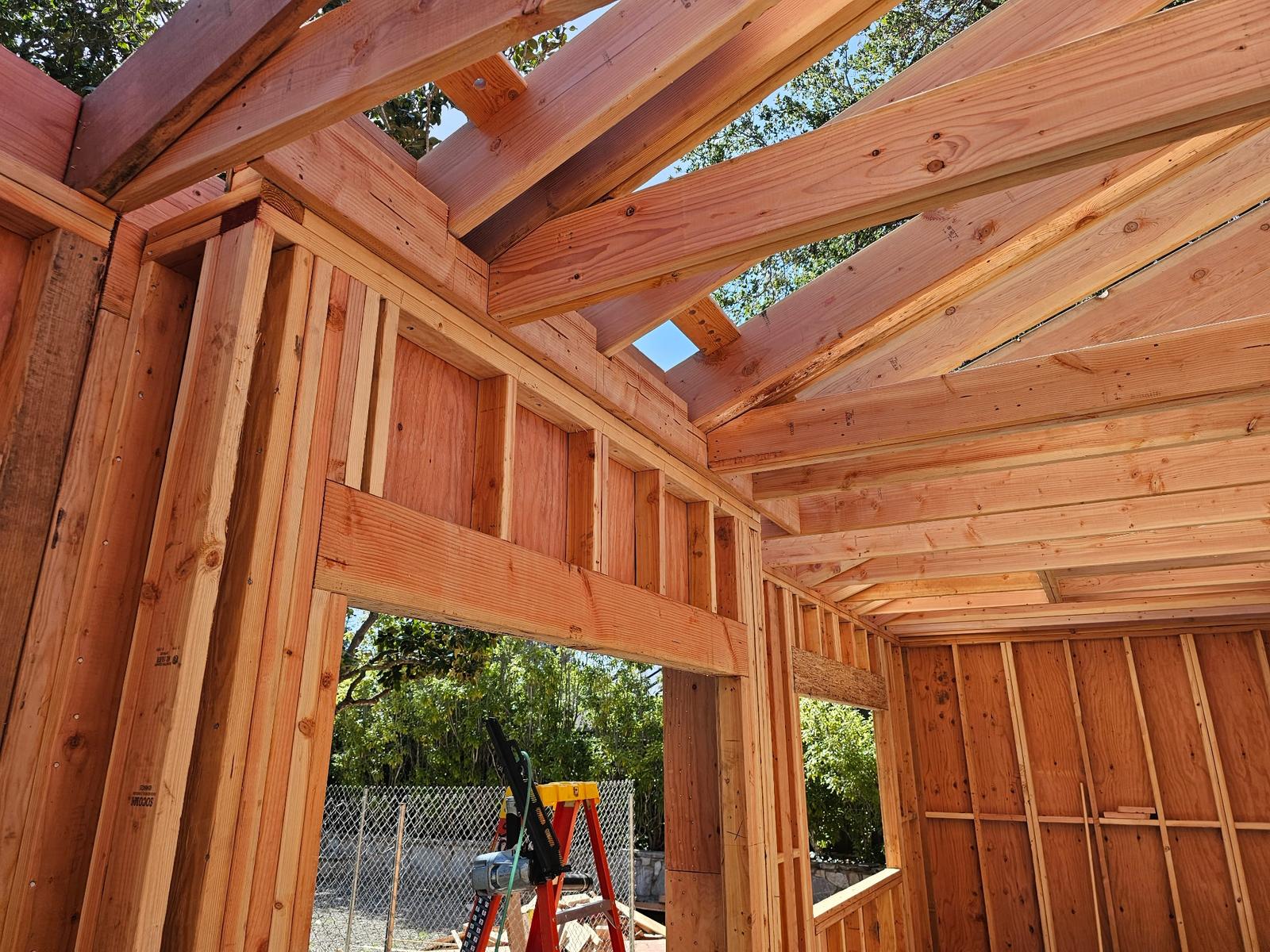
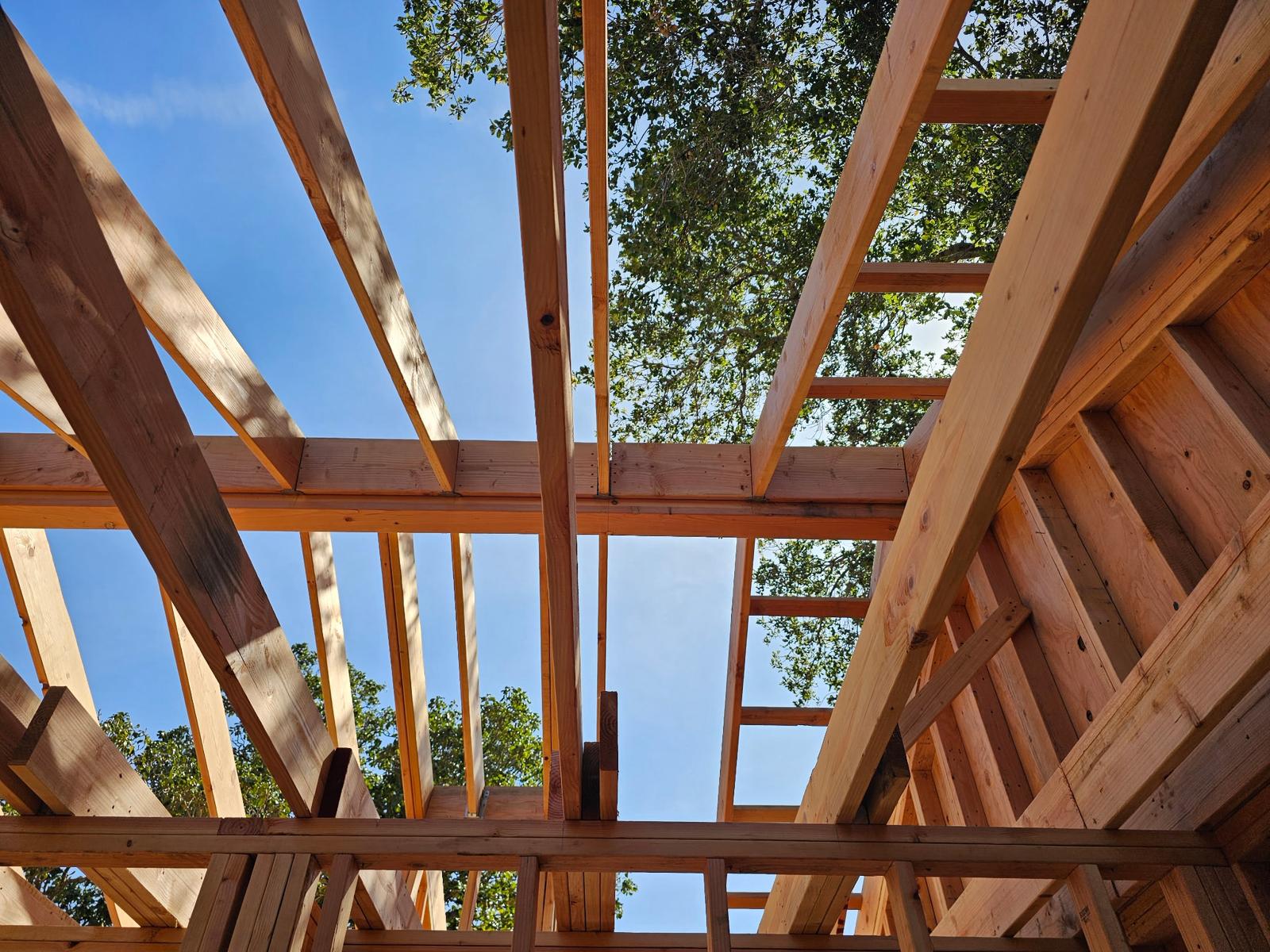
Add project photos here — site photos of framed houses, ADU structures, and roof systems in San Francisco, Oakland, San Jose, Marin, and Peninsula cities build both Google trust and visitor confidence.
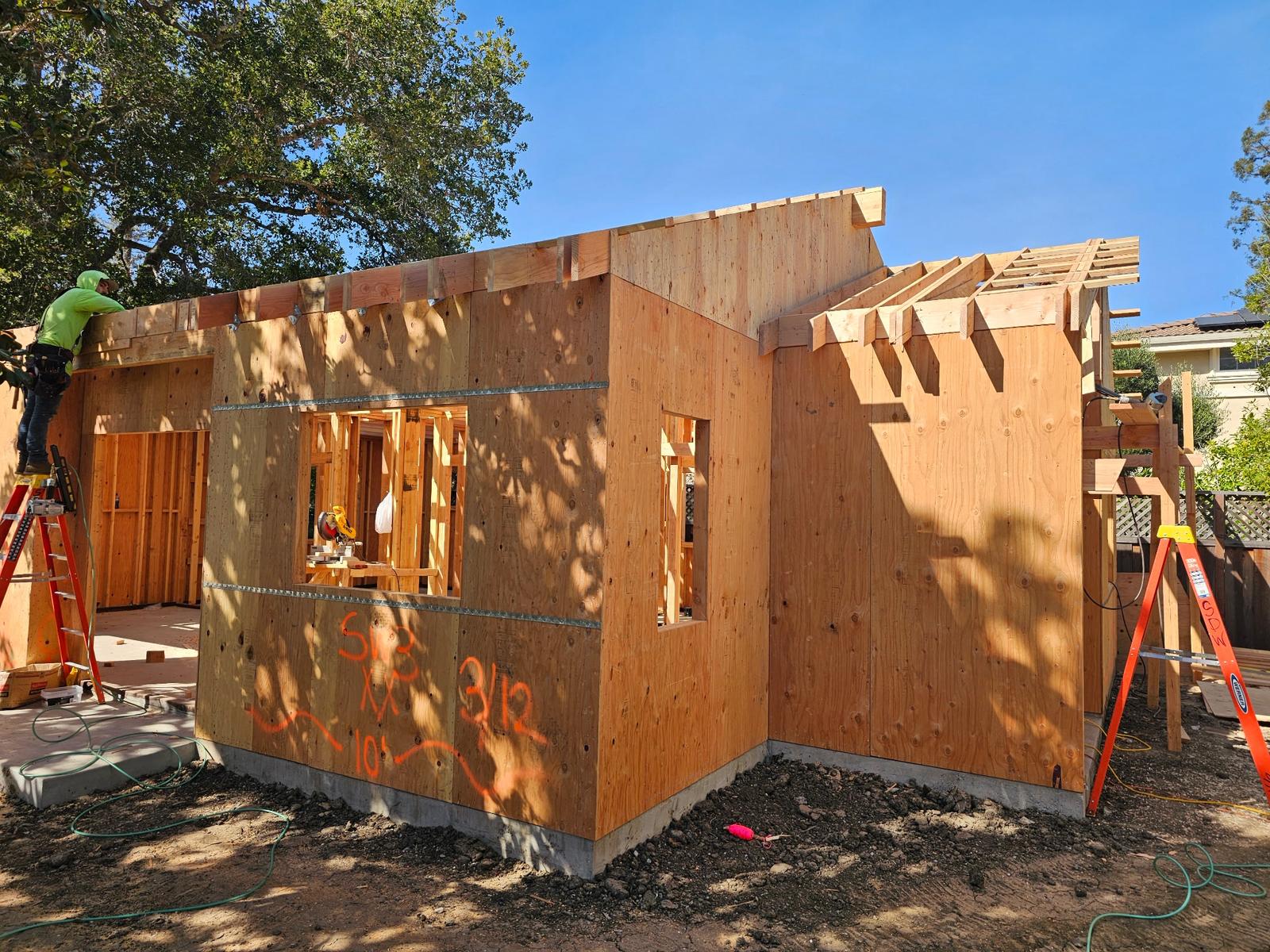
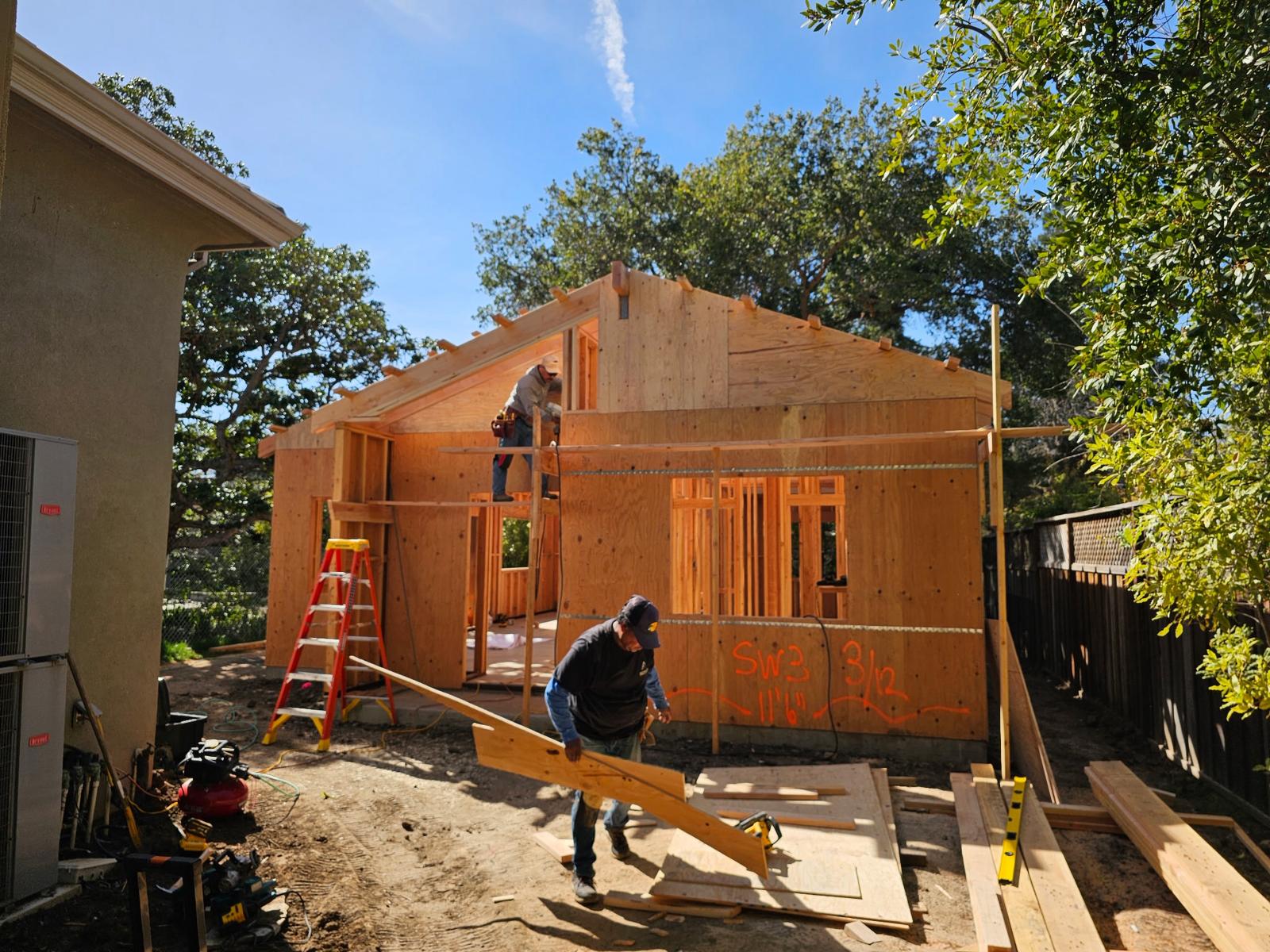
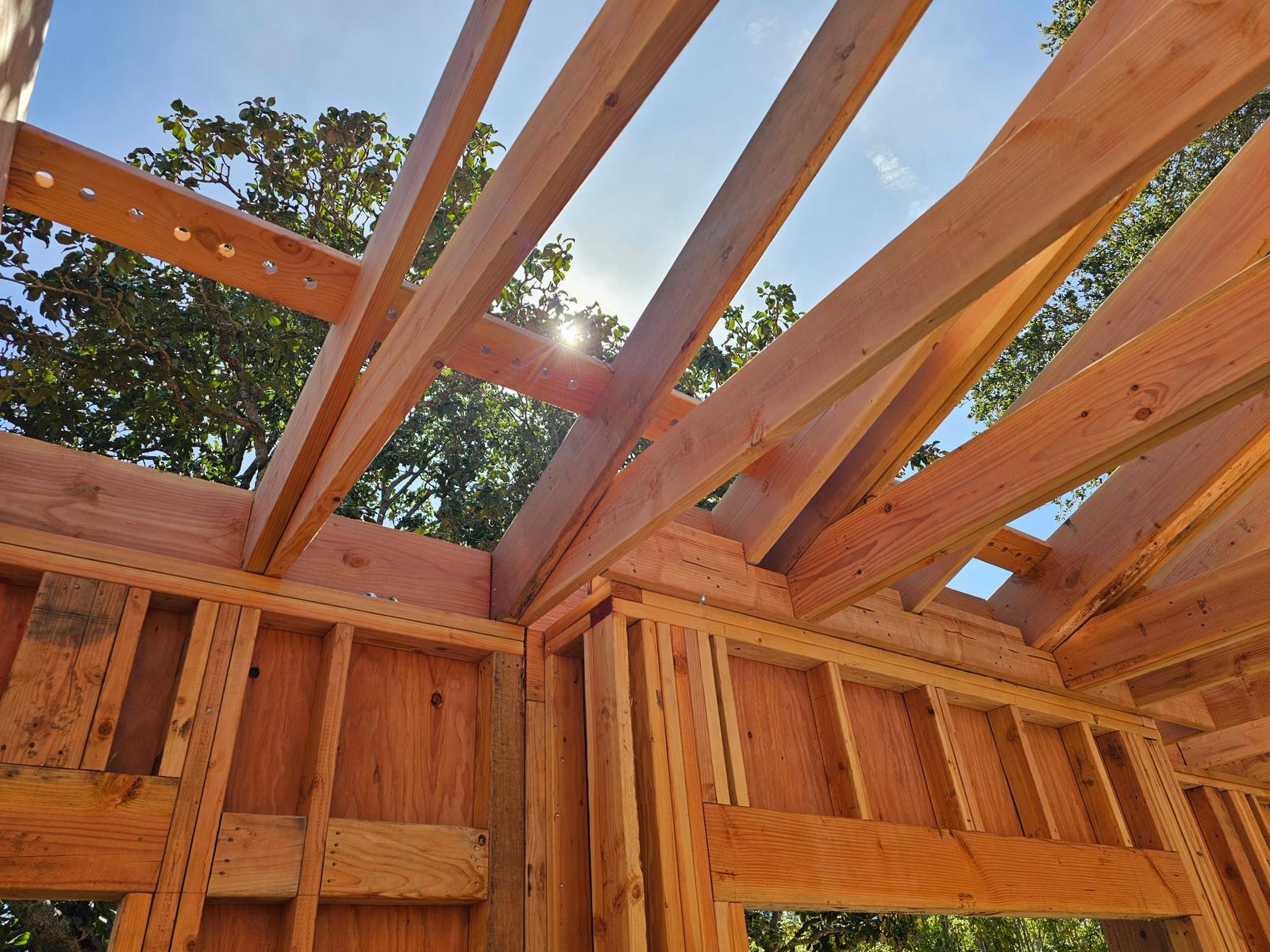
The San Francisco Bay Area falls squarely in California Seismic Design Category D — one of the most demanding residential seismic environments in the United States. This directly shapes how every home in the Bay Area must be framed, and it’s why you need a framing contractor who genuinely understands California structural requirements.
Shear walls are the wood-framed wall panels, covered with structural plywood or OSB sheathing and nailed at a specified fastener schedule, that resist the side-to-side racking forces an earthquake imposes on your structure. A shear wall schedule from the structural engineer specifies panel locations, sheathing type and thickness, nail size and spacing, hold-down hardware locations, and strap tie requirements. Shear wall installation is the most commonly failed framing inspection in California — nail spacing that's 2 inches too wide, a missing hold-down, or sheathing applied over a gap in the blocking will fail inspection. We install every shear wall panel to the engineer's schedule, every time.
San Francisco, Oakland, San Jose, and surrounding cities have among the highest ADU permit volumes in California. State law has dramatically simplified ADU approvals, and Bay Area building departments have responded accordingly. We understand the specific structural requirements for detached ADUs, JADUs, and garage conversion ADUs — and we've framed dozens of them across the entire Bay Area.
California's Title 24 energy efficiency standards affect wall framing in ways that don't apply in other states. Advanced framing techniques (OVE — Optimum Value Engineering) reduce the number of studs and increase insulation cavity space, helping projects meet Title 24 requirements. We're familiar with advanced framing details specified on Bay Area projects and can frame to OVE specs when your architect or energy consultant calls for them.
Bay Area building departments — SF DBI, Oakland, San Jose Development Services, Marin CDA, and Peninsula cities — all require a pre-drywall rough framing inspection that checks all structural framing, shear walls, hardware, and blocking before any drywall or insulation is installed. Some jurisdictions require a dedicated shear wall nailing inspection before sheathing is fully applied. We coordinate all inspections and pass them on the first attempt — a failed framing inspection delays every trade behind us.
Pre-Frame
We review your structural drawings — including the shear wall schedule, hardware schedule, and framing plan — before writing an estimate. We identify any conflicts between architectural and structural drawings and resolve them before we set foot on site. This prevents mid-project change orders that blow your schedule.
Pre-Frame
We order lumber and engineered wood products to your structural specs — LVL beam sizes, I-joist depths, shear wall panel thicknesses, and hardware catalog numbers all specified by your engineer. We verify foundation anchor bolt locations against the framing plan before the first wall plate is drilled.
Framing
Floor joists, rim boards, blocking, and subfloor sheathing go first on multi-story projects. Then we snap layout lines from the foundation plan, frame all walls to location and stud spacing per drawings, and install all headers sized exactly per the structural drawings — never substituting a smaller header to save lumber.
Framing
We apply structural sheathing panels to shear wall locations per the schedule — panel orientation, edge nailing pattern, and field nailing all exactly as specified. Hold-down hardware is installed at all shear wall boundaries. We don't call for inspection until every panel is nailed to spec and every anchor is set.
Framing
Stick-built or truss installation completed to the structural drawings. Hip rafters, valley rafters, and jack rafters cut to the correct angles, or pre-engineered trusses installed per the truss manufacturer's layout drawing. Roof sheathing nailed per the schedule with H-clips or blocking between panel edges where required.
Pre-Drywall
Before calling for inspection, we complete all blocking, install all strap ties and connectors from the hardware schedule, and walk the entire framing package with the structural drawings in hand. Bay Area rough framing inspections check all of this. We pass on the first attempt — no re-inspection delays for your project.
Handoff
Once framing inspection passes, we coordinate with your plumber, electrician, and HVAC contractor on penetration sizes, chase locations, and any blocking needed for their work. We stay available through the project for any framing questions as other trades work through the walls.
SDW Construction has been doing structural work in the Bay Area since 2001 — as SDW Construction and S.D. White Construction. Our framing crews know California seismic requirements because they’ve been framing to them for over 20 years in one of the most demanding construction markets in the country. We don’t subcontract the framing scope. The people who review your drawings are the same people who show up on day one and frame your building.
Donec erat rutrum semper nam dui lacinia id ad lorem. Netus consectetur pretium augue habitant nibh montes imperdiet ornare posuere finibus. Sociosqu elementum faucibus porta pede ultricies purus at.
20+ years of structural framing experience across San Francisco, Oakland, San Jose, Marin, and the Peninsula. Licensed, insured, and thoroughly familiar with SDC D seismic requirements, ADU construction, and Bay Area building department inspection processes.

We read your structural drawings before quoting. We flag conflicts, missing details, and any plan questions — before framing begins, not during it.
We give you a written, itemized estimate — not a ballpark. Materials, labor, hardware, and any engineered lumber products are broken out clearly.
Our own trained crew on site every day. Shear walls, hardware, blocking — all installed to the structural drawings. No subcontracting the framing scope.

We walk the framing package against the structural drawings before calling for inspection. Bay Area rough framing inspections — passed first time, every time.
Quick answers to questions you may have. Can’t find what you’re looking for? Check out our full documentation.
Framing a standard 1,500–2,500 sq ft single-story home typically takes 3–6 weeks with an experienced crew. Two-story homes run 5–8 weeks. Complex roof systems, multi-unit projects, and any project requiring special inspection add time. Bay Area permit and inspection scheduling can add 1–2 weeks to the overall framing sequence.
Yes. Any structural framing work in the Bay Area — room additions, ADUs, new homes, and significant interior wall framing changes — requires a building permit from your local building department. Framing work also requires a pre-drywall rough framing inspection before any insulation or drywall is installed.
A shear wall is a structural wood-framed wall panel covered with structural plywood or OSB sheathing, nailed at a specific pattern, and connected to the foundation with hold-down hardware. Shear walls resist the lateral forces that earthquakes impose on buildings — they are the primary seismic protection system in a wood-framed California home. In the Bay Area’s Seismic Design Category D, shear walls are required in specific locations and quantities determined by the structural engineer. A home with missing or incorrect shear wall installation has significantly reduced earthquake resistance.
Load-bearing walls carry the structural weight of floors, roofs, and walls above them down to the foundation. Non-load-bearing walls divide space but carry no structural load. Removing or modifying a load-bearing wall without proper engineering and temporary shoring can cause serious structural damage. In a typical Bay Area home, exterior walls are almost always load-bearing. Open-floor-plan renovations in older Bay Area homes frequently require steel or LVL beams to carry loads across the removed wall’s span — this always requires a structural engineer’s design and a building permit.
The California Contractors State License Board (CSLB) website lets you verify any contractor’s license status and insurance at cslb.ca.gov. A Bay Area framing contractor should hold a Class B General Building Contractor license or a Class C-5 Framing and Rough Carpentry license. Always ask for the license number and verify directly with the CSLB before signing any contract. SDW Construction — ask us for our certificates before you sign anything.
Advanced framing — also called Optimum Value Engineering (OVE) — reduces studs from standard 16-inch on-center spacing to 24-inch on-center, uses single top plates, and eliminates unnecessary jack studs and cripples. This reduces lumber use by 15–25% and increases wall cavity space for insulation, helping California Title 24 energy compliance. We’re familiar with OVE details and can frame to these specs when your architect or energy consultant calls for them.

We are a licensed and insured Bay Area concrete contractor providing all types of concrete construction for both commercial and residential clients. Operating as SDW Construction / S.D. White Construction, serving the Bay Area since 2001.
630 Second St rodeo CA 94572
Mon–Fri: 7:30AM – 5:30PM
Saturday: Closed
Sunday: Closed
Proudly serving the entire San Francisco Bay Area — San Francisco, Oakland, San Jose, Marin County, the Peninsula, and surrounding cities.
© 2025 SDW Construction / S.D. White Construction. All Rights Reserved.